The best early spring lawn fertilizer helps your grass recover from winter, preventing weeds while delivering nutrients to green up your turf and build deep roots. When choosing, look for formulas with pre-emergent herbicides for weed prevention, high-phosphorus starter fertilizers for new grass, high-nitrogen blends for quick greening, or slow-release nitrogen for steady feeding.
Your grass is coming out of a long winter slumber. In high desert climates like Northern Nevada, temperature swings can leave lawns patchy and pale. Early spring fertilization replenishes energy reserves, strengthens roots for summer heat, and crowds out weeds.
Timing is crucial. Wait until soil temperatures reach 50-55°F—typically late March through April in northern regions. Applying too early feeds dormant weeds; too late, and you miss the window to prevent crabgrass.
Understanding the N-P-K ratio on the bag is key. These three numbers represent nitrogen (for green growth), phosphorus (for roots), and potassium (for overall plant strength).
After a tough winter, your lawn’s energy reserves are depleted. The best early spring lawn fertilizer provides a crucial nutritional boost. Without it, your grass will struggle to green up, leaving it vulnerable to weeds, disease, and summer stress.
Early spring fertilization does more than just wake up your lawn; it sets the stage for a healthy season. It helps your grass produce vibrant green leaves, promotes deeper root growth for better water access during dry Reno summers, and strengthens the plant against heat and foot traffic.
The magic happens through three key nutrients. Nitrogen drives leaf growth and green color. Phosphorus builds the root system, which is critical for water and nutrient uptake. Potassium acts like your lawn’s immune system, improving resistance to drought and disease.
Proper fertilization creates a denser turf. A thick lawn naturally crowds out weeds and recovers faster from wear. Early spring feeding builds a foundation of health that carries your turf through the entire growing season.
Choosing the best early spring lawn fertilizer is simpler once you understand the options: granular vs. liquid, slow-release vs. quick-release, and organic vs. synthetic.
Granular fertilizers are solid pellets applied with a spreader. They are cost-effective, and many offer slow-release feeding, which is ideal for consistent nutrition. They must be watered in to activate.
Liquid fertilizers are sprayed on and absorbed quickly through the leaves for a fast green-up. They are great for a quick boost but require more frequent applications and can be pricier for large lawns.
Quick-release fertilizers offer immediate greening but come with a higher risk of nitrogen burn and nutrient runoff. They also cause rapid growth, meaning more mowing.
Slow-release fertilizers feed your lawn gradually over 6-12 weeks. This provides steady nutrition, reduces mowing, and lowers the burn risk.
Organic fertilizers (compost, manure) improve soil health by feeding beneficial microbes. They are slow-release and virtually burn-proof. However, they can be slower to show results and more expensive.
Synthetic fertilizers are manufactured for precise, fast-acting, and predictable results. They are affordable but don’t improve soil health and carry a higher risk of burn and nutrient runoff if over-applied.
Fertilizers with pre-emergent herbicides are your first line of defense against crabgrass and other spring weeds. A pre-emergent creates a barrier in the soil that stops weed seeds from sprouting. It prevents new weeds but does not kill existing ones.
Timing is everything. In Reno, apply when soil temperatures consistently hit 50-55°F (typically late January to mid-April), or when dandelions start to flower.
Critical warning: Do not use pre-emergent fertilizers if you plan to seed or overseed. They will prevent your grass seed from germinating.
For new lawns, sod, or overseeding patchy areas, starter fertilizer is essential. These formulas are designed to help new grass establish strong roots quickly.
Starter fertilizers feature high phosphorus content (the middle N-P-K number), with ratios like 15-20-10. Phosphorus is the key nutrient for root development, helping new seedlings anchor and absorb moisture.
Apply starter fertilizer just before or after seeding/sodding, and work it into the top few inches of soil if possible. Keep the soil consistently moist until the new grass is established.
For a fast cosmetic boost, high-nitrogen formulas are the answer. They are perfect for getting a dull, winter-worn lawn green in a hurry.
These fertilizers feature fast-acting nitrogen with high first numbers in the N-P-K ratio (e.g., 20-0-10). The nitrogen is immediately available, boosting chlorophyll production for a rich green color within days.
However, high-nitrogen formulas carry a higher risk of burning your lawn, especially in Reno’s dry climate. To use them safely, follow the bag’s instructions exactly and water thoroughly after application.
For long-term health and resilience against Reno’s summers, slow-release fertilizers are the superior choice for established lawns.
These formulas deliver nutrients gradually over 6 to 12 weeks. This consistent feeding promotes uniform growth and color without stressful growth spurts, which also means reduced mowing frequency. The lower burn risk makes them more forgiving to apply.
Choosing the best early spring lawn fertilizer is only half the battle; proper timing and application are essential for success.
In Northern Nevada, apply fertilizer when the soil temperature consistently reaches 55°F. This is typically between late March and mid-April in the Reno-Sparks area. Visual cues include forsythia blooms and the first dandelions.
Before you buy, get a soil test. It reveals your soil’s specific nutrient needs and pH level, so you don’t waste money on unnecessary products.
For application, first calculate your lawn’s square footage to determine how much fertilizer you need. Most products recommend 4-5 pounds per 1,000 square feet, but always check the label. Use a broadcast spreader for even coverage, walking at a steady pace and slightly overlapping passes to avoid missed strips.
Watering in the application is a critical final step. It dissolves the granules, washes them off grass blades to prevent burning, and moves nutrients into the soil. Aim for at least half an inch of water immediately after applying.
The very first step is a thorough spring yard cleanup to rake away winter debris. Once the soil warms to 50-55°F, the best first application for most established lawns is a fertilizer with a pre-emergent herbicide to block crabgrass. If you are seeding or overseeding, skip the pre-emergent and use a starter fertilizer instead.
Yes, but with one critical rule: never use a fertilizer containing a pre-emergent herbicide when seeding, as it will prevent grass seeds from sprouting. Instead, choose a starter fertilizer with high phosphorus content (e.g., N-P-K ratio of 15-20-10).
Safety depends on the product, so always read the label first. For most granular fertilizers, keep kids and pets off the lawn until it has been watered in and is completely dry (usually 1-2 hours, but some products recommend 24 hours). Organic fertilizers are generally safer and may allow for immediate re-entry.
Choosing the best early spring lawn fertilizer is about matching the right product to your lawn’s specific needs—whether that’s a pre-emergent for weed control, a starter fertilizer for new seed, or a slow-release formula for overall health. By understanding your soil, grass type, and goals, you can make an informed choice.
Applying that fertilizer at the right time (when soil reaches 50-55°F) and in the right way (with a spreader, followed by watering) is what transforms a good lawn into a great one. This knowledge saves you money, protects our environment, and delivers a lawn that truly thrives.
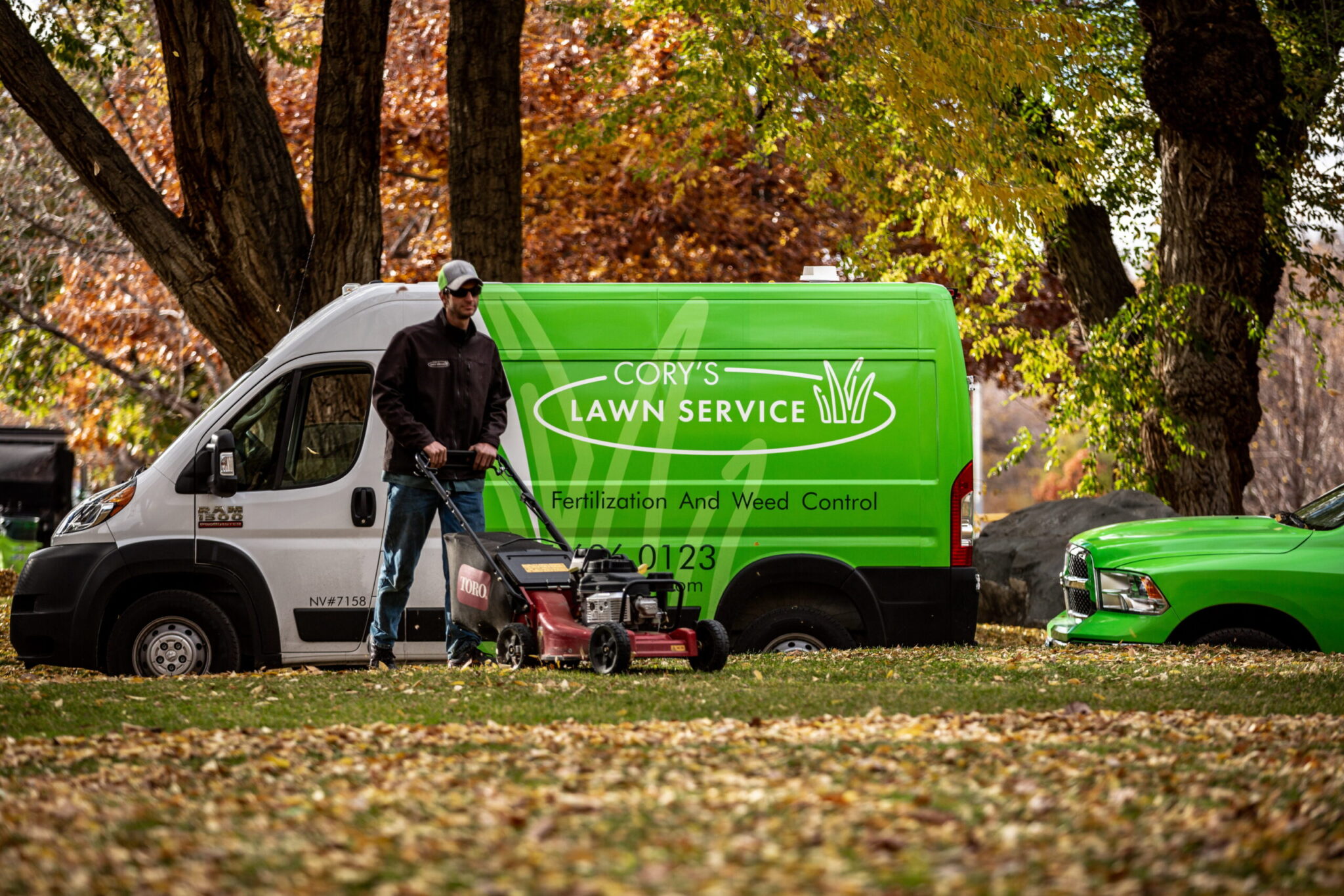
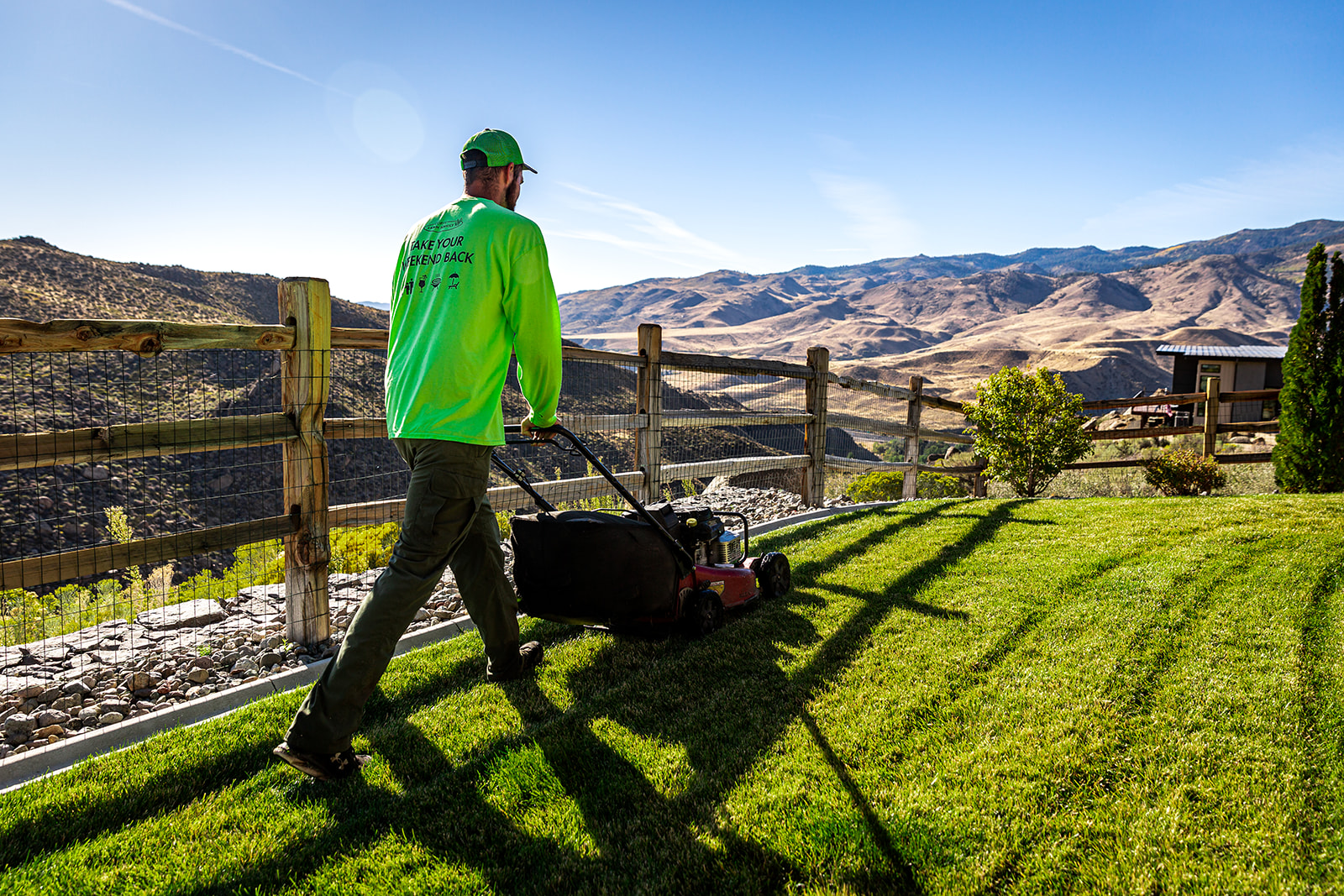
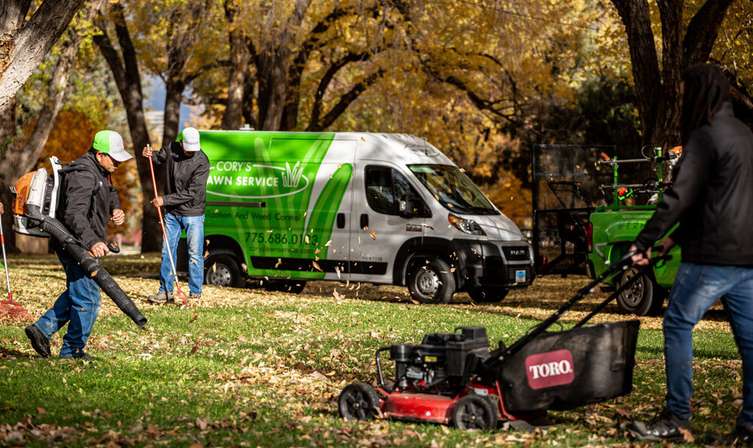
Of course, not everyone has the time or desire to manage N-P-K ratios and spreader settings. If you’re in the Reno area and prefer to leave the science to the professionals, Cory’s Lawn Service is here to help. Our comprehensive lawn care program is designed for our high desert climate, combining expert knowledge with nearly two decades of hands-on experience.
We handle everything from fertilization to weed control, so you can enjoy your weekends and still have the best lawn on the block. Whether you DIY or partner with us, taking action this spring will set your lawn up for a winning season.